Description
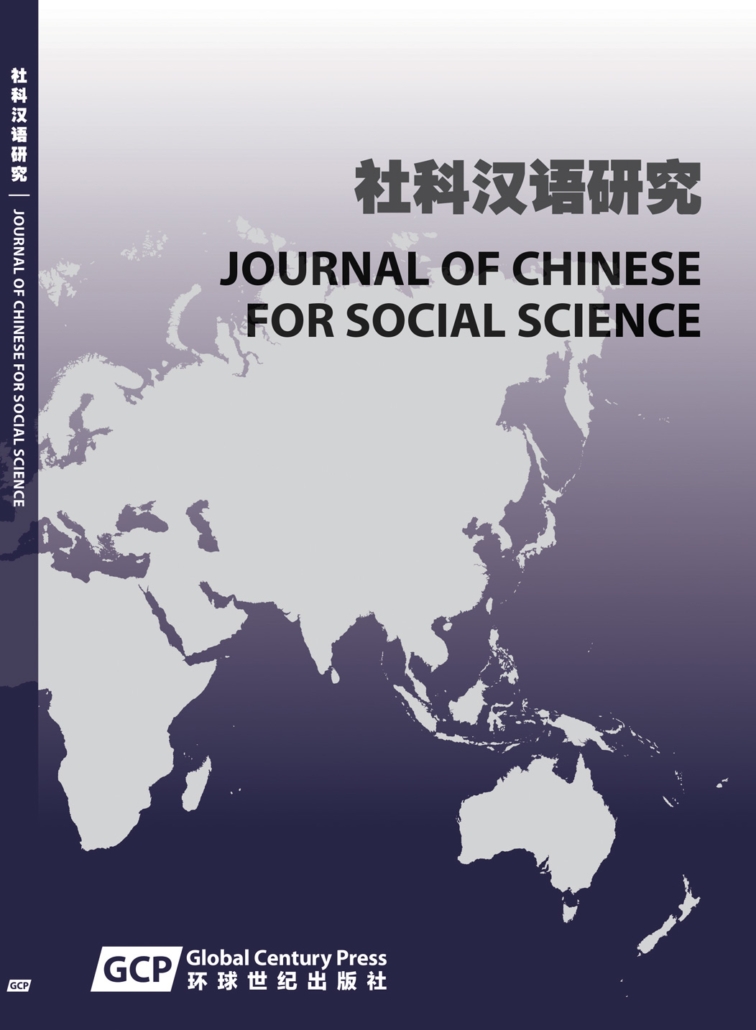
《社科汉语研究期刊》Journal of Chinese for Social Science(JCSS)旨在探讨汉语在社会科学研究、教学、出版、跨文化 cross-cultural 学术交流以及转文化 transcultural 知识生产、传播与实践中的应用,关注语言在具体学术语境中的意义建构,并推动学术界重新审视中国社会科学领域已有译本及语言使用实践中概念、术语和意义的演变。
“社科汉语”Chinese for Social Science 是”专门用途汉语”Chinese for Specific Purposes(CSP)的重要分支,与”科技汉语””商务汉语”等共同构成面向专业领域的汉语研究体系。其特点在于关注语言如何参与社会科学的概念建构与知识生产,强调社会科学知识始终植根于特定的语言、历史、文化和思想传统。这一概念源于2006年成立的伦敦经济学院中国比较研究网 China in Comparative Perspective Network(CCPN at LSE),后发展为 CCPN Global,即全球中国学术院 Global China Academy 的前身。自2014年以来,”全球中国对话系列论坛”Global China Dialogue Series Forum 汇聚各国多学科学者与专业人士,围绕中国与全球议题持续对话,为社科汉语的发展积累了丰富的理论与实践基础。
环球世纪出版社 Global Century Press 长期的英汉双语出版实践,为社会科学概念与思想的双向传播搭建了国际平台。然而,脱离具体语境孤立使用译介术语,往往会造成意义偏移,甚至形成带有东方主义色彩的中国表述。因此,本刊特别关注原始概念与译介概念之间的差异,强调在历史、文化和学术语境中理解和运用语言,以促进更准确、更具解释力的跨文化学术交流与转文化知识生产。
不同于传统的双语 bilingual 或双语出版 dual-language publishing 模式,本刊采用《环球世纪出版社双语体例》²编辑出版,本身即是本社”双语融合出版”Integrated Dual-Language Publishing(IDLP)理论的实践案例。在这一理念下,不同语言并非简单对应的文本版本,而是相互补充的知识组织、诠释和传播方式;融合式双语出版不仅是翻译过程,更是转文化知识生产、传播与实践的组成部分。
《社科汉语研究》2025年第4期在延续“社科、汉语与研究”三条主线的基础上,对栏目设置和出版形式进行了进一步拓展。本期设“教坛论文”“学生习作”“名家科研译介”“社群建设”和“双语融合”五个栏目,其中“社群建设”和“双语融合”为新增栏目。“社群建设”关注学术社群、平台与合作实践;“双语融合”将环球世纪出版社原创的双语融合出版 Integrated Dual-Language Publishing(IDLP)应用于本刊的编辑出版实践。第一部分“本刊双语融合信息”由作者和编者共同参与,按照统一规范呈现本期文章的相关中英文信息;第二部分“本社双语融合及相关信息”由出版社提供,为作者投稿、编辑及出版提供相关规范和信息。附录以英文呈现“双语融合”栏目的内容,使英语世界的读者能够了解本刊及本期内容,体现不同于一般 bilingual 或 dual-language 出版的融合式双语呈现,以促进知识的跨语言传播与共享。本期还首次为中文“征稿启事”配置独立 DOI,使征稿信息能够作为可识别、可检索和可引用的内容得到更广泛传播,从而扩大本刊的作者和读者群体,并吸引更多作者关注和投稿。
浏览《社科汉语研究期刊》(JCSS)各期内容,请在下方选择相应卷期。查看全部卷期及各篇文章,请访问本刊往期存档。
ISSN 2633-9501 (印刷版)
ISSN 2633-9633 (电子版)
DOI https://doi.org/10.24103/jcss.cn
订阅: https://globalcenturypress.com/services/subscriptions-jcss
The Journal of Chinese for Social Science (JCSS) explores the use of Chinese in social science research, teaching and publishing, in cross-cultural academic exchange, and in transcultural knowledge production, dissemination and practice. It examines how meaning is constructed through language in specific academic contexts, and promotes a re-examination of how concepts, terms and meanings have evolved in existing translations and language-use practices in the Chinese social sciences.
Chinese for Social Science is an important branch of Chinese for Specific Purposes (CSP). Together with Chinese for Science and Technology, Business Chinese and related areas, it forms part of a broader research framework for Chinese in professional domains. What distinguishes it is its focus on how language participates in the construction of social science concepts and in knowledge production, and its emphasis that social science knowledge is always rooted in particular linguistic, historical, cultural and intellectual traditions. The concept originated in the China in Comparative Perspective Network at the London School of Economics (CCPN at LSE), founded in 2006, which later became CCPN Global, the predecessor of Global China Academy. Since 2014, the Global China Dialogue Series Forum has brought together scholars from many countries and disciplines, as well as professionals from a range of institutions, in sustained dialogue on China and global issues, laying a rich theoretical and practical foundation for the development of Chinese for Social Science.
Global Century Press’s long-standing practice of English–Chinese bilingual publishing has created an international platform for the two-way circulation of social science concepts and ideas. Yet translated terms used in isolation, detached from their specific contexts, often undergo shifts in meaning and may even give rise to Orientalist representations of China. JCSS therefore pays particular attention to the differences between original concepts and their translated counterparts, and stresses the importance of understanding and using language within its historical, cultural and academic contexts, so as to foster more accurate and analytically more powerful cross-cultural academic exchange and transcultural knowledge production.
Unlike conventional bilingual or dual-language publishing models, JCSS is edited and published in accordance with the Global Century Press Bilingual Style Guide² and itself serves as a practical example of the Press’s theory of Integrated Dual-Language Publishing (IDLP). Under this approach, the two languages are not simply corresponding versions of a text, but complementary ways of organising, interpreting and disseminating knowledge. Integrated dual-language publishing is therefore not merely a process of translation, but an integral part of transcultural knowledge production, dissemination and practice.
The 2025 fourth volume of the Journal of Chinese for Social Science continues to develop its three interconnected strands of “social science”, “Chinese” and “research”, while further expanding its editorial structure and publishing format. This volume comprises five sections: Teaching and Research, Student Work, Research Translation, Community Building, and Integrated Dual-Language Publishing, with Community Building and Integrated Dual-Language Publishing introduced as new sections. Community Building focuses on academic communities, platforms and collaborative practices. The Integrated Dual-Language Publishing section applies Global Century Press’s original approach of Integrated Dual-Language Publishing (IDLP) to the journal’s editorial and publishing practice. Its first part, “Integrated Dual-Language Publishing (IDLP) information for this journal issue”, involves both authors and editors in presenting relevant Chinese and English information for the articles according to a consistent set of conventions. The second part, “Integrated dual-language and related information of Global Century Press”, provides publishing information and conventions for authors, editors and the submission process. The Appendix presents the IDLP section in English, enabling readers in the English-speaking world to engage with the journal and the contents of this volume. Rather than simply presenting two languages alongside each other in conventional bilingual or dual-language formats, this integrated approach brings the two languages together to facilitate the cross-language dissemination and sharing of knowledge. For the first time, the Chinese Call for Papers is also assigned its own DOI, making it identifiable, searchable and citable, and enabling wider dissemination of information about the journal to reach more authors and readers and prospective contributors.
Browse all issues of the Journal of Chinese for Social Science (JCSS) by selecting a volume below. To view all volumes and individual articles, please visit the JCSS Archive.
- JCSS Archive
- Return to JCSS Homepage
ISSN 2633-9501 (Print)
ISSN 2633-9633 (eJournal)
DOI https://doi.org/10.24103/jcss.cn
Subscription: https://globalcenturypress.com/services/subscriptions-jcss